

The Black Hole Lifestyle & Products
Black Hole Experiences: Movie, Space & Omni Man Insights

When it comes to the mysteries of the universe, nothing sparks curiosity more than black holes. For decades, scientists, filmmakers, and storytellers have explored what it means to encounter these cosmic giants. From the cult classic film The Black Hole 1979, to real-life black hole experiences shared by astrophysicists, and even imaginative portrayals like the Omni Man black hole scene, humanity’s fascination with these enigmatic objects continues to grow. In this article, we’ll dive into the cinematic, scientific, and cultural sides of black holes to understand why they captivate us so deeply.
The Black Hole 1979: A Cult Classic That Sparked Curiosity
Released by Disney, The Black Hole 1979 was one of the first mainstream films to visualize the terrifying beauty of space’s most mysterious object. This movie didn’t just entertain—it introduced audiences to the possibility that a black hole experience could be more than theoretical. Featuring a daring space crew, a sinister scientist, and spectacular visual effects for its time, the film set the stage for decades of black hole fascination.
The film’s ending, where the characters confront the overwhelming power of the singularity, left audiences questioning both science and spirituality. Today, The Black Hole 1979 is remembered not only for its pioneering special effects but also for planting the seed of curiosity about what happens beyond the event horizon.
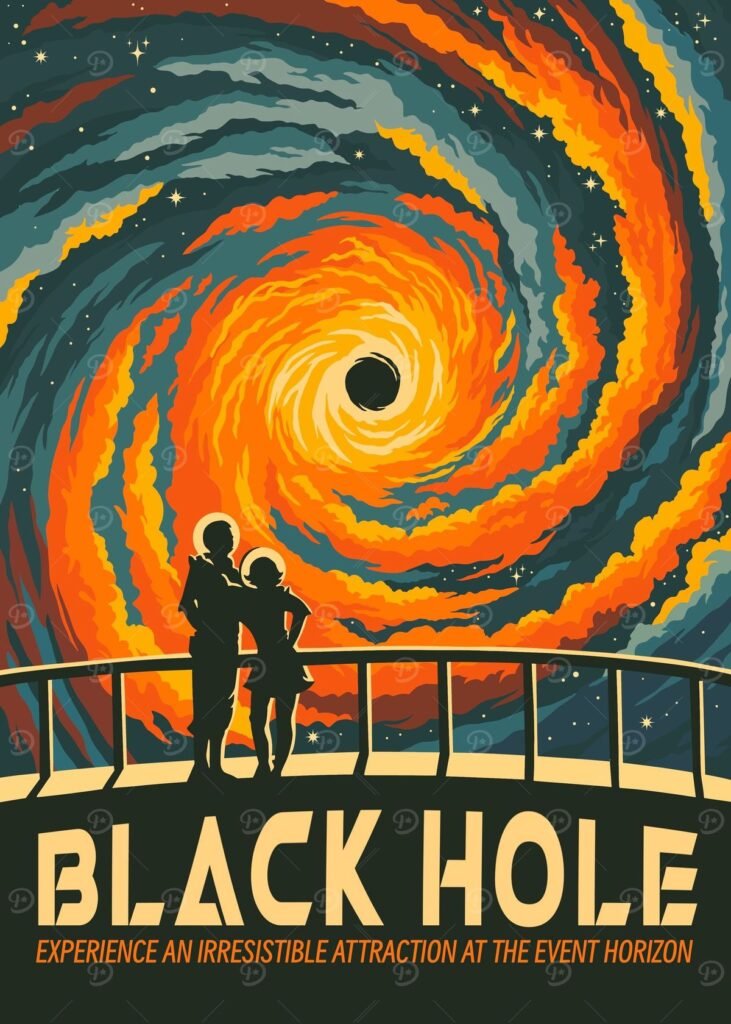
Black Hole Experience: What Science Tells Us
Beyond Hollywood, the true black hole experience is even more mind-bending. In astrophysics, a black hole represents a region in space where gravity is so strong that not even light can escape. If someone were to approach one, they would encounter spaghettification—a process where tidal forces stretch matter into long, thin shapes.
NASA and other space agencies use simulations to study these events. While no human has ever experienced a black hole firsthand, scientists rely on gravitational wave detection, event horizon imaging, and mathematical models to predict what might happen. The first-ever image of a black hole, released in 2019, gave humanity a glimpse of the real thing, making the black hole experience more tangible than ever before.
Omni Man Black Hole: Fiction Meets Science
Fans of the series Invincible know the chilling scene involving Omni Man and a black hole. This fictional portrayal highlights the destructive force of these cosmic monsters while blending it with superhero storytelling. The Omni Man black hole sequence is a prime example of how pop culture keeps scientific ideas alive in the public imagination.
Interestingly, while such portrayals are exaggerated, they often borrow from real astrophysical theories. The immense gravitational pull, time dilation effects, and inescapable force are rooted in actual science. That’s why even a superhero can’t escape the grip of a black hole—reminding audiences just how powerful these phenomena are.
The Fascination with Cosmic Mystery
Why are people so obsessed with black holes? Part of it comes from the mystery. Unlike stars or planets, we can’t see black holes directly—they’re invisible, detected only through their effects on surrounding matter. This makes every black hole experience an exercise in imagination and scientific deduction.
Movies like The Black Hole 1979 or modern hits like Interstellar take advantage of this intrigue, weaving stories that blur the line between reality and fiction. Similarly, scenes like the Omni Man black hole battle keep younger audiences hooked on space science, even if through fantasy.
Black Holes in Pop Culture and Education
Black holes have become more than just scientific phenomena; they’re cultural icons. From films and TV series to video games and comic books, the black hole experience has been reimagined in countless ways. Even educational institutions use pop culture references—like The Black Hole 1979 or Omni Man black hole scenes—to explain complex astrophysical concepts to students.
This blending of entertainment and science ensures that black holes remain relevant in both classrooms and theaters. They inspire curiosity, encourage deeper learning, and keep humanity connected to the wonders of the cosmos.
Real-Life Encounters with the Unknown
Although no astronaut has had a direct black hole experience, space exploration continues to bring us closer to understanding them. The Event Horizon Telescope and missions like those studying gravitational waves allow scientists to “listen” to the universe. Each new discovery makes black holes less theoretical and more of a tangible reality.
Just as The Black Hole 1979 sparked imagination decades ago, today’s real-world breakthroughs give us a modern perspective. These discoveries make the idea of encountering a black hole less of a sci-fi fantasy and more of a scientific challenge waiting to be solved.
Lessons from Movies and Science
The way The Black Hole 1979 portrayed cosmic danger and how the Omni Man black hole scene dramatized intergalactic battles both serve as gateways to understanding real physics. They remind us that science and storytelling can work together to explain the unexplainable.
While Hollywood might exaggerate, the underlying concepts—gravity, time dilation, event horizons—are very real. This balance between entertainment and education ensures that black holes remain fascinating across generations.
Philosophical and Spiritual Dimensions
Many scientists and philosophers argue that a black hole experience isn’t just about physics—it’s about existence. The idea of something so powerful that it erases time and space challenges our very understanding of reality.
The Black Hole 1979 leaned into this by portraying the singularity as a place where science meets the afterlife. Meanwhile, the Omni Man black hole scene in pop culture raises questions about strength, mortality, and the limits of power. These portrayals show how black holes touch not just our scientific curiosity but also our philosophical imagination.
The Future of Black Hole Research
As technology advances, our ability to simulate and even “see” black holes improves. Future telescopes and space missions may bring us closer to experiencing the unthinkable. One day, humanity might even send probes near a black hole to gather direct data.
When that happens, we’ll be able to compare the real black hole experience with what movies like The Black Hole 1979 or comics like Invincible imagined decades earlier. Until then, the mix of science and storytelling keeps our fascination alive.
Conclusion
From the haunting visuals of The Black Hole 1979, to the imaginative Omni Man black hole battle, to cutting-edge research that makes the black hole experience more real than ever—these cosmic phenomena continue to inspire awe. They are not just astronomical objects but powerful symbols of the unknown.
The blend of movies, science, and pop culture ensures that black holes remain one of humanity’s greatest fascinations. Whether through a telescope, a film reel, or a superhero story, black holes invite us to confront the limits of knowledge and dream of what lies beyond the stars.


